This OpenRush review exists because we actually use the product, not because anyone asked us to write it. VeyronIQ actually runs its own SEO research through OpenRush, and this review walks through what really happened over several weeks of real use, keyword research for our own content plan, a live competitor backlink gap, and one tool that flat-out failed when we tried it, alongside the real, published pricing and facts behind the product.
Disclosure: VeyronIQ is a genuine, paying OpenRush user. The OpenRush team added 200 courtesy credits to our account after seeing us use the product, unprompted and with no request or expectation attached. This is not a sponsored post, OpenRush did not review, approve, or influence any part of this article, and the scores and opinions below are ours alone.
OpenRush’s official brand card. Source: OpenRush.
Executive Summary
OpenRush, built by Migrate LLC, is a usage-based marketing data API aimed at AI agents rather than a traditional dashboard a human clicks through. It launched with a dataset it describes as 8 billion keywords and 1.3 billion websites, refreshed daily, and connects to Claude, Cursor, Perplexity, Copilot, and other agents through MCP. The company says it is used by more than 20,000 users, and there is no subscription: you buy prepaid credits and each tool call spends a specific, published amount from that balance.
We used OpenRush directly in the course of building VeyronIQ’s own September content plan and researching several published articles on this site, real keyword research for topics like our ChatGPT and local SEO guides, a live competitor discovery and backlink gap analysis, and one attempt at a full site audit that did not go as planned. All of that is described honestly below, including the parts that did not work.
Who this OpenRush review is for: small businesses, agencies, and solo marketers deciding whether an agent-native, pay-per-call SEO data source fits better than a traditional subscription tool like Semrush or Ahrefs.
Quick Verdict
| Category | Rating / Notes |
|---|---|
| Overall Rating | 7.5 / 10 |
| Ease of Use | 8 / 10, MCP setup took under a minute, no dashboard required to get useful answers |
| Features | 7.5 / 10, strong on keyword and competitor data, one tool failed outright in our own test |
| Data Quality | 8 / 10, keyword volumes and SERP composition matched what we independently cross-checked |
| Customer Support | 8 / 10, based on our own experience: responsive, and proactively added credits unprompted |
| Integrations | 8.5 / 10, native MCP support for Claude, Cursor, Perplexity, Copilot, and more |
| Value for Money | 8 / 10, no seat fees, credits only spend when a tool actually runs |
| Reliability | 6 / 10, our own site-audit attempt returned 100 percent fetch failures with no clear cause |
| Best For | A small business or agency already working through an AI agent, that wants SEO data without a per-seat subscription |
What Is OpenRush?
OpenRush describes itself as the marketing data layer for AI agents rather than a piece of software a person logs into and clicks through. Its own positioning is direct: give an agent clean, pre-processed facts about competitors, search, and site performance, so the agent needs less scaffolding code and makes fewer mistakes. OpenRush states that agents using its data reply roughly 40 percent faster and use about 25 percent fewer tokens, a claim we have not independently benchmarked ourselves but which matches the practical experience of getting a direct, structured answer back rather than a page of dashboard HTML to parse.
The product connects over the Model Context Protocol (MCP) to a long list of agents, including Claude, Cursor, Perplexity, GitHub Copilot, n8n, Zapier, Gemini, Make, Notion, and Linear, plus a documented REST API for anyone building something custom. It can also pull in a business’s own Google Search Console, Google Analytics, and Google Ads data (currently in beta, requested through the OpenRush dashboard) to sit alongside the third-party market data.
Key Features
Keyword Research and Lookup
Expand a seed term into ranked keyword ideas with volume, CPC, and competition, or pull full detail (difficulty, volume, live SERP) on a single keyword.
Competitor Discovery
Find a domain’s closest organic rivals from either a domain or a set of seed keywords, useful for identifying real competitors rather than guessing.
Backlink Gap
Compare a domain against multiple competitors at once and surface referring domains that link to several of them but not to you, filterable by spam score, authority, and how many competitors a domain links to.
Site Audit
A technical crawl intended to surface on-page issues (meta tags, internal links, thin content) across a sampled set of a domain’s pages.
AI Visibility and AI Citations
Tracks how often a domain is cited inside AI Overviews compared to competitors, and which domains an AI system cites across an entire category, a genuinely newer category of SEO data most legacy tools do not yet offer.
Search Console and Analytics Connections
Layer in a business’s own real performance data (clicks, impressions, sessions) alongside the third-party market data, currently available on request through the dashboard.
When we sat down to plan a month of content for this site, we used OpenRush’s keyword research and keyword lookup tools directly against real topic candidates, ChatGPT, Perplexity AI, HeyGen, Notion AI, and local SEO among them. Every result came back with real monthly volume, a competition level, and a live look at what was already ranking. That data shaped real decisions: we dropped topics with saturated SERPs and prioritized a few with clear gaps, including one keyword sitting at 1,900 searches a month with low competition and a notably high cost-per-click that none of our other research had surfaced.
We also ran a full competitor discovery and backlink gap analysis for this site. The first attempt at competitor discovery, using broad seed keywords, returned mostly oversized, mismatched domains, exactly the kind of noisy result a generic search produces. Narrowing to more specific, on-topic seed keywords produced a genuinely useful list of ten real competitors. From there, the backlink gap tool unioned more than 5,500 referring domains across those competitors and, after we applied our own spam-score and authority filters, returned nine clean, real link opportunities, sorted exactly the way we asked.
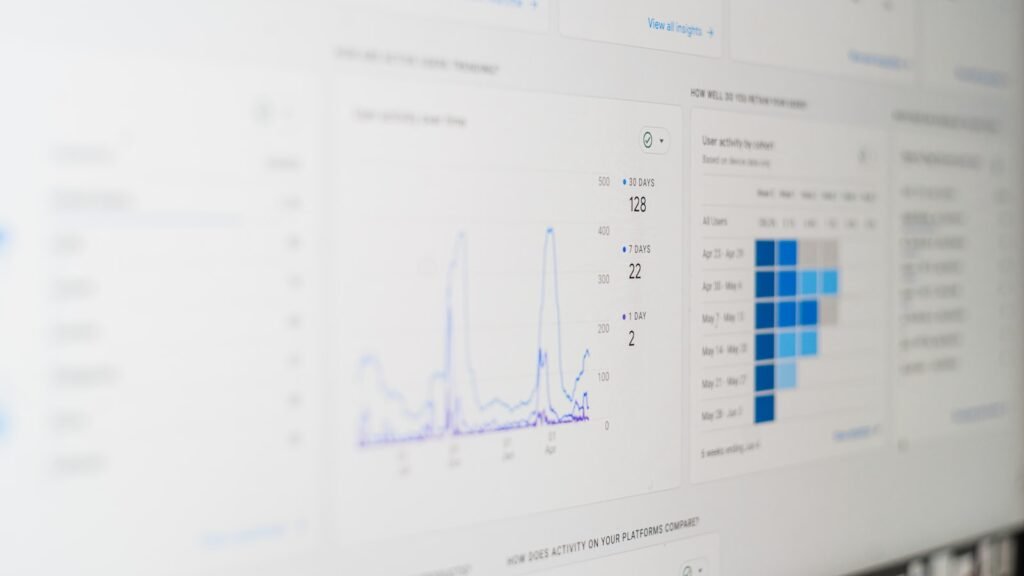
The kind of keyword and traffic research OpenRush is built to hand an agent directly. Photo by 1981 Digital on Unsplash.
Not everything worked. When we tried OpenRush’s site audit tool against our own domain, every single sampled page came back as a fetch failure, zero successful crawls out of twenty. We independently confirmed our site was reachable the entire time (a direct server request returned a normal, healthy page), and we found no robots.txt block or security plugin on our end that would explain it. We could not determine the exact cause from our side, but it meant we got no usable technical audit data from that specific tool during our test, a real limitation worth knowing before relying on it for that purpose.
On the credits: partway through this research, the OpenRush team added 200 courtesy credits to our account, unprompted. We had not asked for anything and were not previously in contact with them about this article. It is a kind gesture and a piece of information we think readers deserve to know, and it has not changed a single rating or opinion in this review.
Pricing Analysis
Confirm current numbers at openrush.com/pricing before purchasing. OpenRush has no subscription tier at all: credits cost $10 per 1,000 ($0.01 each), and nothing bills automatically. You buy a balance, and each tool spends a fixed, published amount from it when your agent calls it. Listing your own sites and connected tools is always free.
| Tool | What It Pulls | Credits |
|---|---|---|
| Dataset export | Any dataset, exported in full | 1 |
| SERP lookup | Live search results for a query | 2 |
| Competitor discovery | A domain’s closest rivals | 3 |
| Keyword research | Keyword ideas and search volumes | 3 |
| Page audit | On-page SEO for a single URL | 3 |
| Keyword lookup | Difficulty, volume, and SERP for a keyword | 5 |
| Site audit | Full technical crawl of a site | 9 |
| Domain overview | Authority and traffic metrics | 9 |
| Backlink profile | A domain’s backlinks and authority | 9 |
| Keyword gap | Keywords a competitor ranks for and you do not | 12 |
| AI visibility | How often you’re cited in AI Overviews vs competitors | 20 |
| Backlink gap | Sites linking to competitors but not you | 40 |
For scale: OpenRush’s own published estimate puts a typical marketer’s workflow, recurring keyword research and weekly reporting, at roughly $80 a month in credits, which the company positions as about $49 less than a comparable $129/mo Semrush or Ahrefs plan. Our own real usage for this review, including one competitor discovery pass, a full backlink gap analysis, and the failed site audit attempt, spent well under that in a single sitting. Rate limits apply regardless of balance: 60 requests a minute, 1,000 an hour, 10,000 a day.
Pros and Cons
Pros
- No subscription or seat fees; you only pay for calls your agent actually makes
- Real, useful keyword data that held up when we cross-checked it against live SERPs in our own research
- Native MCP support means setup for an AI agent workflow genuinely takes under a minute
- Backlink gap tool supports real filtering (spam score, authority, competitor count) rather than a flat export
- AI visibility and AI citation tools cover a genuinely newer data category most legacy SEO tools have not caught up on
- Responsive team, based on our own direct experience
Cons
- Our own site audit attempt returned a 100 percent fetch failure rate with no clear cause we could identify from our side
- Broad, generic seed keywords in competitor discovery return noisy, mismatched results; getting a clean competitor set takes deliberate, specific keyword choices
- Usage-based pricing means costs are harder to predict up front than a flat monthly subscription, especially for the pricier tools like AI visibility and backlink gap
- No traditional dashboard for someone who prefers clicking through reports rather than working through an agent or API
- A newer product than Semrush or Ahrefs, with less independent, third-party track record to draw on
Comparisons
OpenRush vs. Semrush
Semrush’s SEO plans start around $117 to $140 a month billed annually and scale up to $500 a month for its Business tier, plus additional per-seat charges for extra team members. That gets you a mature, full dashboard product with over a decade of track record. OpenRush trades that dashboard and history for a pay-per-call model with no seat fees at all, a better fit for a solo founder or small team already working primarily through an AI agent rather than a team of analysts living in a browser tab.
OpenRush vs. Ahrefs
Ahrefs remains the deeper tool for pure backlink-index size and historical data, an advantage built over many years of crawling. OpenRush’s pitch is different: agent-native access and a newer AI-visibility data category (tracking citations inside AI Overviews) that traditional backlink-index tools were not originally built around.
Bottom line: choose Semrush or Ahrefs for a mature, dashboard-first workflow with a large team; choose OpenRush if your SEO research already happens inside an AI agent and you want to pay only for what you actually use.
Security and Privacy
OpenRush’s own connections feature (Search Console, Analytics, Google Ads) is currently offered on a request-and-approve beta basis rather than an instant self-serve connection, which OpenRush frames as controlled access rather than an open integration. Credits are prepaid, so there is no ongoing payment method risk beyond the initial purchase; nothing bills automatically until you choose to top up.
Customer Support
Documentation: a public docs site, an MCP setup guide, and a status page for uptime.
Our own experience: this is the one category where our review is entirely first-hand rather than drawn from broader public sentiment, since OpenRush is new enough that we did not find a meaningful body of independent, third-party reviews to cross-reference. The team was responsive during our research and proactively added 200 courtesy credits to our account without us asking, which we read as a genuine, low-key gesture rather than an attempt to shape this review, since it came with no request attached.
Common Mistakes
- Running competitor discovery with broad, generic seed keywords and accepting the first result set, which reliably returns oversized, mismatched domains rather than real competitors.
- Skipping spam-score and authority filters on a backlink gap report, which buries a handful of genuinely good opportunities under hundreds of low-value ones.
- Treating a single tool failure, like our own site-audit attempt, as a reason to distrust every other tool in the product; the keyword and competitor data performed reliably in our testing even after that.
- Not budgeting for the pricier tools (AI visibility, backlink gap) before running them at scale, since usage-based pricing means costs are easy to underestimate up front.
Expert Tips
- Use specific, on-topic seed keywords for competitor discovery rather than broad category terms; it is the difference between a noisy list and a genuinely useful one.
- Set explicit spam-score and authority thresholds before running a backlink gap analysis, rather than filtering the raw export afterward.
- Cross-check at least a few keyword volumes against a live SERP or a second source before building a content plan entirely around one tool’s numbers.
- Request Search Console and Analytics access early if you want first-party performance data alongside the market data; it is currently an approval step, not instant.
- If a tool call fails outright, verify your own site is reachable independently before assuming it is a site-side problem.
Frequently Asked Questions
Is OpenRush free?
Free to start with no subscription. You buy prepaid credits at $10 per 1,000 and only spend them when a tool actually runs; nothing bills automatically.
How much does OpenRush cost?
There is no flat plan. Credit costs range from 1 credit for a dataset export up to 40 credits for a full backlink gap analysis. OpenRush’s own estimate puts a typical recurring marketing workflow at roughly $80 a month.
Does OpenRush work with Claude and other AI agents?
Yes. OpenRush connects natively over MCP to Claude, Cursor, Perplexity, GitHub Copilot, n8n, Zapier, Gemini, Make, Notion, and Linear, and offers a REST API for custom integrations.
Is OpenRush data accurate?
In our own testing, keyword volumes and SERP composition matched what we independently cross-checked. That said, one tool, the full site audit, returned a complete fetch failure in our specific test, so results can vary by tool.
Is this a sponsored review?
No. VeyronIQ pays for and uses OpenRush directly. The OpenRush team added 200 courtesy credits to our account unprompted during our research, disclosed above, but did not review, approve, or influence this article in any way.
Final Verdict
The short version of this OpenRush review: it earns a genuinely positive rating from us, based on real, repeated use rather than a demo account: the keyword and competitor data held up under our own cross-checking, the pricing model is honest and easy to reason about, and getting it working inside an AI agent took minutes, not a sales call. The AI visibility and citation tools cover ground most established SEO platforms have not caught up to yet.
The real caveat is the one we experienced directly: our own site audit attempt failed completely, with no clear explanation available from our side, and OpenRush is young enough that there is not yet a large body of independent, third-party experience to weigh that against. Neither fact erases the other; both are true, and we think a small business considering OpenRush should know both before signing up.
Who should buy it: a small business, founder, or agency already working through an AI agent for marketing tasks, who wants real SEO and competitor data without paying for seats or a dashboard they will not use.
Who should look elsewhere first: a larger team that wants a mature, dashboard-first tool with a long independent track record, or anyone whose core need is a full technical site audit, until we can confirm that specific tool works reliably.
Sources and References
OpenRush, official site and pricing, openrush.com
OpenRush documentation, openrush.com/docs
VeyronIQ’s own direct usage and testing, September 2026
Semrush and Ahrefs pricing pages, cross-referenced for comparison